
AI-Powered MRI Prior Authorization Services
Outsourced MRI PA team handling submissions against ACR Appropriateness Criteria and payer policies. AAPC-credentialed specialists paired with AI agents. 4-hour standard turnaround.
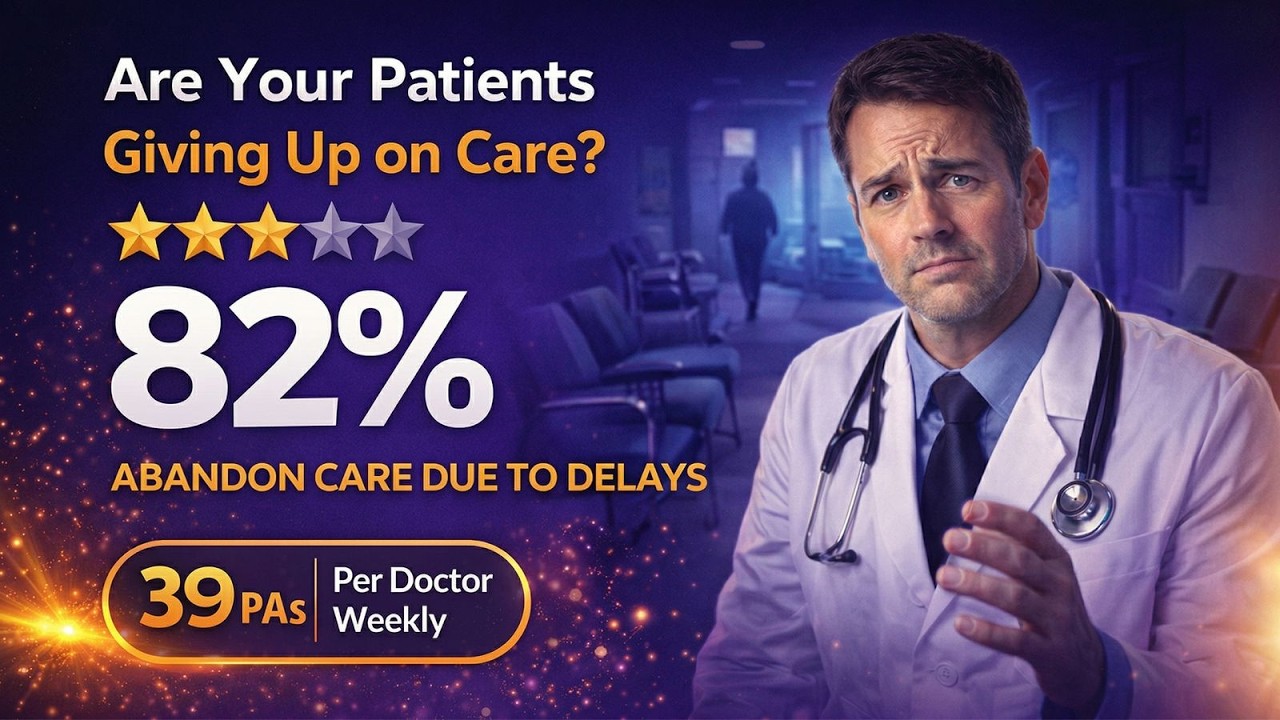
How we get MRI prior auths through every major payer.
A real look at our MRI PA workflow, AAPC-credentialed PA specialists handling the case.
Tell us your practice. We’ll project your savings in 24 hours.
Single specialty or multi-site? Send us your situation, we map the right MRI Prior Authorization team.
What Is MRI Prior Authorization?
Picture a Monday morning at a busy practice. Thirty-Six pending MRI PAs on the queue. Five urgent requests waiting before noon. A peer-to-peer review at 11 a.m. for a denial. That’s the day MRI PA tries to eat.
MRI prior authorization is the payer’s gate before non-emergent MRI care. advanced imaging including MRI brain, lumbar spine, knee, abdomen, MR angiography, and contrast vs non-contrast indication mapping. Each payer has its own medical necessity policy. Each procedure has its own documentation set.
Staffingly’s AI-powered MRI PA service handles the full workflow. AI agents read the clinical note, pull clinical question, prior imaging, symptom duration, neurologic findings, ACR Appropriateness Criteria, and pre-populate the submission. AAPC-credentialed PA specialists review, sign off, and submit through CoverMyMeds, Availity, Carelon, eviCore, and direct payer portals. Standard turnaround is 4 hours. Expedited PAs go out within 60 minutes.
Most MRI practices pair PA with our imaging eligibility verification, imaging medical billing, and imaging credentialing to keep first-pass approval rates high and AR days low.
What MRI Groups Need to Know About PA in 2026
CMS-0057-F took effect January 1, 2026 for impacted payers: Medicare Advantage, state Medicaid FFS and Managed Care, CHIP FFS and Managed Care, and FFE Qualified Health Plan issuers. Those plans now owe a PA decision within 7 calendar days standard and 72 hours expedited, with a specific denial reason every time. The first public reporting deadline for PA approval and denial metrics was March 31, 2026. Commercial PPO and HMO plans outside this list are not directly bound by the rule, though most are aligning voluntarily.
MRI physicians average 39 PA requests per week per physician per the 2024 AMA survey, and 31 percent say PAs are often or always denied. When practices appeal, 81.7 percent of denials are fully or partially overturned. That’s a lot of revenue sitting in a workflow most groups under-resource.
Hiring an in-house MRI PA coordinator costs $55K to $84K fully loaded. Staffingly’s outsourced MRI PA service runs $399 per role per week at single tier, $349 at team, $299 at department or enterprise. Live in 5 to 10 days. 2-week free trial.
Why MRI PA Eats Days Most Groups Don’t Have
MRI PA is its own workflow. Each payer has specific medical necessity criteria, typically anchored to ACR Appropriateness Criteria or similar specialty AUC. Each procedure needs the right combination of clinical question, prior workup, and patient-specific indication. Each payer rewrites these annually.
Layer on the peer-to-peer review. The 2024 AMA survey found only 15 percent of physicians say the peer is actually qualified to make the call. That’s an hour of an ordering physician’s day spent explaining clinical criteria to someone outside the specialty.
That’s why mid-size and enterprise MRI practices outsource. Not to cut a coordinator. To stop losing 13 hours of physician time per week to a workflow that doesn’t need a physician.
How Staffingly’s MRI PA Is Built Different
AI + AAPC-credentialed PA specialists, working inside your EMR. Not portal data entry. Not call-center scripts. A clinical-grade PA team that knows MRI.
AI + Specialist Pairs
AWS Bedrock clinical reasoning agent reads the chart and drafts the medical necessity narrative. An AAPC-credentialed PA specialist reviews, refines, and submits. AI handles 80 percent of keystrokes.
MRI-Trained
Day-one productive on MRI medical necessity policies across all major payers, ACR Appropriateness Criteria, prior workup documentation, and CPT code selection.
EMR-Native
Works inside Epic, Athena, eClinicalWorks, AdvancedMD, Cerner, NextGen, and Kareo. No screen-share. No data re-entry. Direct EMR access via encrypted VPN with full audit trail.
HIPAA + SOC 2 + ISO 27001
BAA signed before day one. SOC 2 Type II audited. ISO 27001 CSF-aligned controls. Read our HIPAA security posture.
Payer Rules Engine
n8n payer workflow orchestration with CoverMyMeds, Availity, eviCore, Carelon, and direct portal integration. Live policy library for all 12 major payers across MRI service lines.
Peer-to-Peer Prep
We brief your ordering physician 30 minutes before the MRI peer-to-peer call. Clinical question, prior workup, ACR or specialty AUC citation by section. Most MRI peer-to-peers turn into approvals.
Denial Recovery
Every denial gets analyzed by our AI appeal agent. 81.7 percent of appealed denials overturn per the 2024 AMA PA survey. We work that statistic to your favor with structured letters, evidence packs, and IRO escalation when needed.
2-Week Free Trial
Scope one workflow (typically nuclear stress or cardiac MRI). 14 days. If the throughput, accuracy, and turnaround don’t hold, you walk away. Most pilots convert to full rollout.
MRI CPT Codes and Documentation We Handle
Common MRI CPT codes that trigger PA across commercial, Medicare Advantage, and Medicaid Managed Care. Our specialists know the ACR-anchored documentation for each.
| CPT / HCPCS | Procedure | Typical PA Trigger | Common Documentation |
|---|---|---|---|
| 70551 | MRI brain without contrast | Almost every payer | Clinical question, prior workup |
| 70553 | MRI brain with and without contrast | Almost every payer | Same as 70551 plus contrast indication |
| 72148 | MRI lumbar spine without contrast | Almost every payer | Symptom 6+ wks, neurologic findings, conservative therapy |
| 72149 | MRI lumbar with and without contrast | Most payers | Contrast indication (post-op, infection workup) |
| 73721 | MRI knee without contrast | Almost every payer | Failed PT, mechanical symptoms, MRI indication |
| 74181 | MRI abdomen without contrast | Almost every payer | Clinical question, prior US or CT |
| 74183 | MRI abdomen with and without contrast | Most payers | Contrast indication for liver, biliary, pancreatic workup |
| 70544 | MR angiography head, no contrast | Most payers | Aneurysm screening, stroke workup |
| 70547 | MR angiography neck, no contrast | Most payers | Carotid stenosis workup |
| 75561 | Cardiac MRI without contrast | Almost every payer | Clinical question, prior echo or stress |
Coverage rules change by payer and by plan. Our payer policy library is refreshed monthly across commercial, Medicare Advantage, Medicaid Managed Care, and Tricare.
How a MRI PA Moves Through Staffingly
Intake from EMR
AI agent pulls the order, clinical note, prior imaging, and demographic data from your EMR within minutes of the order being placed. No staff trigger needed.
AI medical necessity draft
AWS Bedrock matches clinical data to the patient’s payer policy and drafts the medical necessity narrative with citations. Clinical question, prior imaging, symptom duration, neurologic findings, acr appropriateness criteria, all in the right format.
Specialist review and submit
An AAPC-credentialed MRI PA specialist reviews the AI draft, fixes anything the agent missed, and submits via CoverMyMeds, Availity, Carelon, eviCore, or the payer portal.
Status monitoring
We poll for status every 4 hours. CMS-0057-F windows kick in for MA, Medicaid MC, and CHIP: 72 hours expedited, 7 days standard. When the decision lands, we route it back into your EMR.
Peer-to-peer prep
If the payer requires P2P, we brief your ordering physician with chart highlights, prior therapy timeline, and ACR Appropriateness Criteria and specialty-society imaging guidelines 30 minutes before the call. Most P2Ps convert to approval.
Appeals if denied
Denials flow to our appeals agent. Structured letters, evidence packs, IRO escalation if needed. Per the 2024 AMA PA survey, 81.7 percent of appealed denials overturn fully or partially.
A Lumbar MRI Denial Overturned in One P2P Call
Representative Scenario · CPT 72148 MRI Lumbar · UHC MA Plan
A 12-radiologist diagnostic imaging center in Ohio (OH) sent us a 2-day-old UHC MA denial on CPT 72148 MRI lumbar spine for a 58-year-old patient with 8 weeks of progressive low back pain with right L5 radiculopathy, failed 6 weeks of PT, and adequate NSAID trial. The reviewer denied citing “insufficient documentation of conservative therapy or neurologic findings.”
Our PA specialist pulled the chart, attached the PT progress notes with the radiculopathy documentation, mapped the symptom progression to ACR Appropriateness Criteria for Low Back Pain, and packaged the 2024 ACR Low Back Pain Appropriateness Criteria as the appeal anchor. We briefed the ordering primary care physician 30 minutes before the P2P with chart highlights.
Outcome: Approval issued during the P2P call. MRI scheduled 4 days later. Total Staffingly time from intake to approved: 3 hours.
Scenario composited from anonymized client workflows. No PHI shown. Outcomes vary by chart strength, payer, and reviewer.
How AI and Automation Make MRI PA Faster and More Accurate
80 percent automation, 20 percent clinical judgment
Our PA stack pairs AWS Bedrock for clinical reasoning with n8n for payer workflow orchestration. The Bedrock agent reads the chart, pulls the clinical data the payer wants, and matches it to the relevant payer policy. Google Vertex AI classifies supporting documents. For electronic prior auth we route through CoverMyMeds and Surescripts. An AAPC-credentialed PA specialist reviews and signs off before submission. AI handles roughly 80 percent of the keystrokes. Clinical decisions stay with humans. Our PA team works from secured Staffingly facilities.
InsuVerifAI, our proprietary EV+PA SaaS, handles eligibility checks and benefit verification in parallel so the PA team always has live coverage data before submitting. For ePA-enabled drugs and procedures, we route through CoverMyMeds and Surescripts for instant payer responses. Claude 4.5 Haiku powers our voice agent that handles peer-to-peer scheduling and payer status calls.
The result: AI handles roughly 80 percent of the keystrokes on a MRI PA. The AAPC-credentialed PA specialist owns the 20 percent that needs clinical judgment, payer relationship knowledge, or peer-to-peer prep. We never claim fully automated PA, because clinical and compliance decisions still need a human. The combination is what gets us to a 4-hour standard turnaround and an above-industry first-pass approval rate.
One Flat Weekly Rate. No Surprises.
Dedicated prior authorization specialists at a fixed weekly cost. 45 hours per week, fully managed. No contracts, no minimums, no hidden fees.
One prior authorization specialist, single-location practice
5+ specialists, mid-size practice or health system region
10+ specialists, multi-location health system or PE-backed group
All plans include dedicated prior authorization specialists, payer portal access, EMR integration, and a 2-Week Free Trial with a signed BAA. No long-term contract required.
Remote MRI PA, Delivered Across the U.S. and Canada
Our PA specialists work from secured Staffingly facilities in India, Pakistan, and Bangladesh. Every specialist is overseas-licensed and educated in healthcare administration, AAPC-credentialed, and HIPAA-trained before day one. MRI practices in Texas (TX), Florida (FL), California (CA), New York (NY), New Jersey (NJ), Illinois (IL), Pennsylvania, Ohio (OH), Georgia (GA), North Carolina (NC), Arizona (AZ), and Michigan (MI) run their MRI PA queue with us.
Pair MRI PA With:
Real-time benefit checks before MRI.
CPT and ICD-10 coding accuracy for MRI.
Payer enrollment for MRI providers.
The AI stack powering our MRI PA and EV workflows.
Related Prior Authorization Services:
Common Questions About MRI Prior Authorization
What is MRI prior authorization and when is it required?
How does AI-powered MRI prior authorization work?
How long does MRI prior authorization take with Staffingly?
Payer approved my MRI without contrast but I need it with contrast. How do I appeal (AI-Powered MRI Prior Authorization Services)?
How much conservative therapy documentation do I actually need for a lumbar MRI (AI-Powered MRI Prior Authorization Services)?
Lumbar MRI got denied. the ACR criteria mention 6 weeks PT but my patient has only 4 weeks. What works (AI-Powered MRI Prior Authorization Services)?
Lung cancer screening LDCT (G0297) keeps getting flagged. What documentation makes it clean (AI-Powered MRI Prior Authorization Services)?
How fast can my practice or imaging center start outsourcing MRI PAs?
Who handles urgent MRI prior authorizations for BCBS?
How do I outsource MRI PAs for my practice?
Can AI submit a MRI PA without a human?
Talk to a real human about your MRI Prior Authorization
30-minute strategy call. We map your MRI PA volume, payer mix, and EMR setup. No slide deck, just a working plan.

Dan Nandan is the Founder and CEO of Staffingly, Inc., based in Piscataway, New Jersey. With 25+ years in IT consulting and healthcare BPO operations, he was one of the earliest U.S. operators to set up an RPO/BPO delivery network in India over 20 years ago. Today his work centers on AI-driven healthcare workflows and helping MRI practices and health systems cut administrative costs without compromising patient care.
Connect on LinkedIn
Bincy Shiiju Kuriakose is a Clinical Content Reviewer at Staffingly and a U.S. Licensed Registered Nurse (MSN, RN). NCLEX-RN certified with expertise in hospital nursing, telehealth, and nursing education. Reviews every service page for clinical accuracy, HIPAA compliance, and evidence-based best practices.
Connect on LinkedInWhere Our MRI PA Data Comes From
Every stat, threshold, and regulatory window on this page traces back to a primary source. We do not invent numbers.
- CMS Interoperability and Prior Authorization Final Rule (CMS-0057-F). effective dates and decision windows
- 2024 AMA Prior Authorization Physician Survey. 39 PAs per week, denial rates, burnout data
- AMA Prior Authorization Research and Reports. 81.7 percent appeal overturn rate
- ACR Appropriateness Criteria. imaging appropriateness evidence anchor
- CMS Medicare Coverage Database. Medicare MRI coverage and LCDs
- UnitedHealthcare Radiology PA. payer-specific MRI PA list
- AANS Neurosurgical Conditions. neurologic imaging evidence
- KFF Medicare Advantage Prior Authorization Data. MA plan PA volume and denial trends
- MGMA Medical Group Practice Benchmarks. PA staffing and cost benchmarks
- HFMA Revenue Cycle Resources. AR days, denial rates, and PA workflow benchmarks
Security Your Compliance Officer Will Sign Off On
Staffingly is audited to SOC 2 Type II with zero exceptions and certified for ISO/IEC 27001:2022, HIPAA, and GDPR. In eight years we have never had a breach. Every workstation runs inside the Venn Blue Border secure enclave on US-based servers, screen captures and downloads are blocked by policy, and every engagement operates under a signed BAA, and Staffingly maintains $5M in professional liability (E&O) and cyber insurance as part of its enterprise risk-management program.