
Radiology Medical Billing Services
Outsourced radiology billing built for the modifier 26 / TC split. Hospital-based radiology groups bill the professional component, freestanding imaging centers bill the global code, and we know which one applies before the claim ships. CIRCC-credentialed coders on the interventional desk, AAPC CPC coders on diagnostic. Live in 14 days. 2-Week Free Trial, BAA Signed.
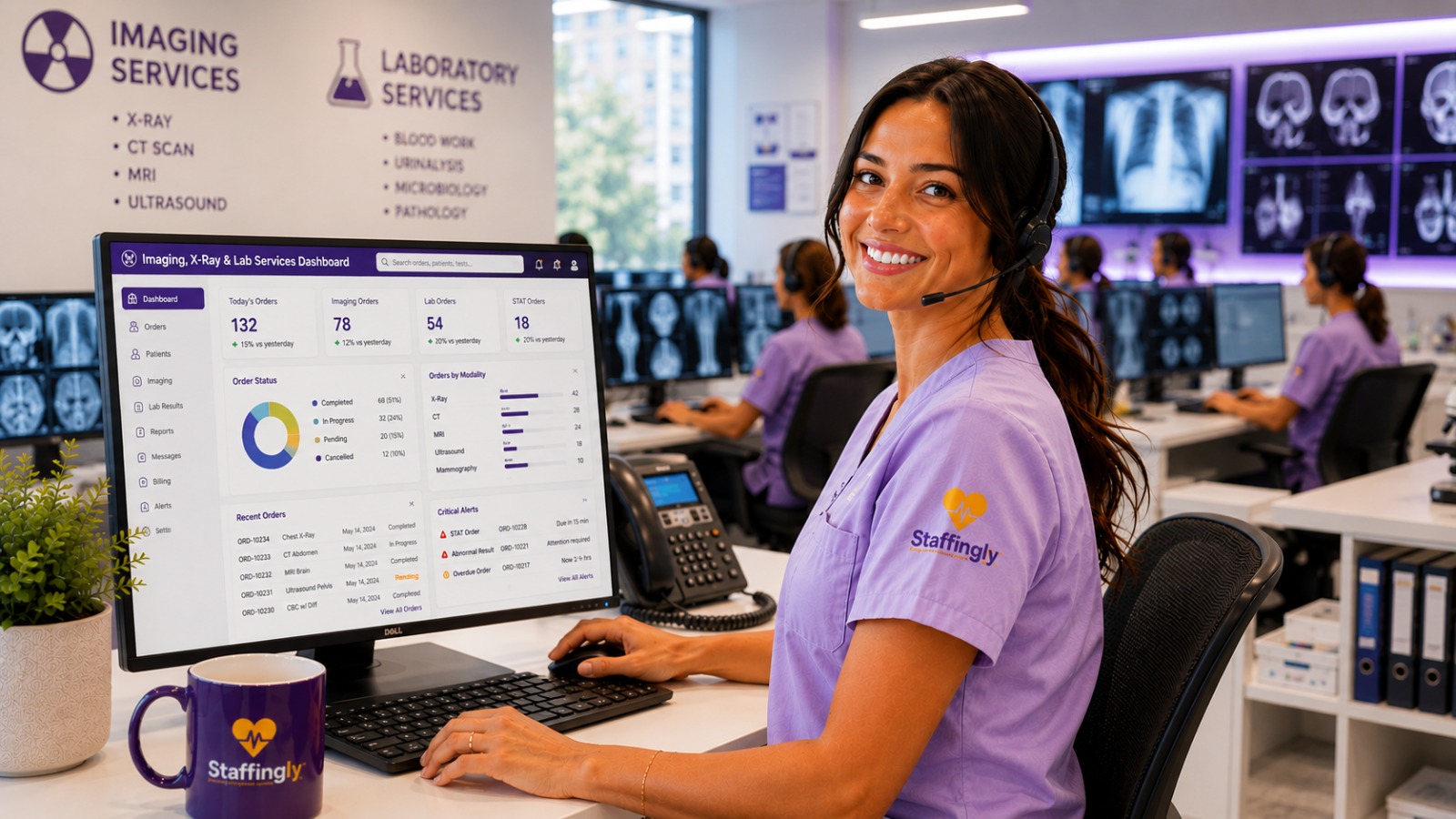
Outsourced radiology billing built for the modifier 26 / TC split.
Hospital-based radiology groups bill the professional component, freestanding imaging centers bill the global code.
What Is Radiology Medical Billing?
What is radiology medical billing? Radiology medical billing is the coding, claim submission, and AR follow-up workflow for imaging services. The core technical detail is the split between modifier 26 (professional component, the radiologist's read) and modifier TC (technical component, the equipment and supplies). Hospital-based radiology groups bill modifier 26 only. Freestanding imaging centers that own the equipment and employ the radiologist bill the global code with no modifier. Industry denial rates run 5 to 10 percent; well-performing groups hold the rate under 5 percent.
Staffingly's Radiology Medical Billing service runs inside your EMR, RIS, and clearinghouse every day. The diagnostic radiology coding desk is staffed by AAPC CPC-credentialed coders. The interventional radiology coding desk is staffed by AAPC CIRCC-credentialed coders for vascular access, embolization, biopsy, and drainage codes. We handle modifier 26 splits for hospital-based groups, global code billing for freestanding centers, and the cross-walk when a multi-site MSO has both arrangements.
Unlike generic healthcare BPO firms, Staffingly assigns AAPC-credentialed specialists who become an extension of your radiology operation. Same coders every day, same modifier conventions, same accountability. Denial work hits the top two root causes first: prior auth (about 35 percent of radiology denials, routed back to the PA desk) and medical necessity (about 25 percent, rewritten the way the payer wants it). AR follow-up runs on a 31-to-60-day cadence with payer-specific scripts for Aetna, UHC, BCBS, Humana, and Medicare Advantage plans.
This page is part of the main Imaging & Labs page . Most radiology operations pair this service with radiology prior authorization and remote radiology coding to close the loop from order to clean claim. See the main Labs & Imaging page at /labs-imaging/services/ for the full vertical.
Tell us about your practice.
Send us your situation and our team will scope the right setup, usually within one business day. No obligation.
What You Need to Know About Radiology Medical Billing
Modifier 26 (professional component) and modifier TC (technical component) drive every radiology claim decision. Hospital-based groups bill 26 only. Freestanding imaging centers that own equipment and employ the radiologist bill the global code.
Industry radiology denial rates run 5 to 10 percent. Well-performing groups hold the rate under 5 percent. The top two root causes are prior auth (about 35 percent) and medical necessity (about 25 percent).
CIRCC for interventional, AAPC CPC for diagnostic. The CIRCC exam is $450 with 36 CEUs every two years (16 IR-specific). Our IR and diagnostic desks are staffed by the right credentials for each modality.
Why Is Radiology Billing So Hard for Most Imaging Operations?
A hospital-based radiology group sends a 70450 CT head claim with no modifier. The professional fee gets denied because the hospital already billed the global code. A freestanding imaging center bills the same 70450 with modifier 26 and modifier TC on two separate claim lines. The TC line pays. The 26 line pays. But because the practice owns the equipment AND employs the radiologist, they should have billed the global code and gotten paid for both components on one line, faster.
Most generalist billers do not catch the difference. Most generalist BPOs do not have CIRCC-credentialed coders. Then the AR ages, the underpayments stack up, and the radiology MSO calls a meeting to ask why the lab and imaging line is bleeding margin. Meanwhile your scheduler is also juggling scheduling, insurance, patient preparation, and imaging techniques coordination for tomorrow's CT slots.
How Is Staffingly's Radiology Medical Billing Different?
Dedicated Radiology Coders
Your own team, not shared staff. They learn your place of service, equipment ownership, employment status, and modifier conventions for consistent results.
Payer-Specific AR Desks
Aetna, UHC, BCBS, Humana, Medicare Advantage each get their own desk for AR follow-up and underpayment audits.
HIPAA + SOC 2 Day 1
Encrypted VPN, BAA before kickoff, annual audits. SOC 2 Type II, and ISO 27001 aligned controls.
AI-Augmented Charge Capture
AI checks every claim for the modifier 26 / TC / global flag before submission. Edits surface in under 5 minutes for human review.
CIRCC + CPC Coders
AAPC CIRCC-credentialed coders on the interventional radiology desk. AAPC CPC-credentialed coders on diagnostic. The right credential for each modality.
Weekly KPI Dashboard
Real-time tracking of clean claim rate, denial rate by root cause, AR aging buckets, and net collection ratio. CFO/COO-friendly weekly recap.
Month-to-Month
Scale up or down with 30-day notice. Replace any team member in 48 hours. No long-term contract.
One Coordinator
A single point of contact who owns coding, claim submission, denial work, and AR for your radiology network from day one.
AI + Automation in Radiology Medical Billing
Radiology billing has hundreds of CPT codes, two modifiers that flip the entire claim, and payer-specific rules that change every quarter. AI handles the rule sweep and the modifier check; AAPC-credentialed coders handle the judgment calls. This is how outsourced radiology medical billing works at scale: intelligent automation plus AAPC-credentialed human review, layered into your existing EMR, RIS, and clearinghouse without forcing a platform migration.
Modifier 26 / TC sweep
Every claim auto-flagged against place of service, equipment ownership, and employment status. AI catches the wrong modifier before the claim ships.
Denial root-cause routing
PA denials route back to the radiology PA desk. Medical necessity denials route to the coder for narrative rewrite. Underpayments route to AR for contract audit.
AR aging alerts
Claims aged 31 days surface in the daily queue. AI bots for patient calls handle balance reminders and the human team handles payer-side AR.
How Does the Radiology Medical Billing Process Work?
Kickoff call
We map your imaging modalities, place of service, equipment ownership, EMR and RIS, payer mix, and contracted rates.
EMR + clearinghouse connection
Secure access to your EMR, RIS, and clearinghouse established within 24 to 48 hours.
Coder onboarding
Your dedicated CIRCC and CPC coders complete training on your modifier conventions, payer contracts, and quality thresholds.
Go-live
Daily quality reviews and a 2-Week Free Trial scope. BAA signed before any access.
Performance tracking
Weekly reports on clean claim rate, denial rate by root cause, AR aging buckets, and net collection ratio.
Continuous refinement
Monthly workflow reviews to tighten payer-specific edits and lift first-pass clean claim rate.
Where Can You Get Radiology Medical Billing Services?
Our radiology billing team works remotely inside your EMR, RIS, and clearinghouse. Wherever your imaging network is located, you get the same trained coders, same modifier discipline, same AR cadence.
Radiology groups across California, Texas, Florida, New York, Illinois, and every other state rely on Staffingly for radiology medical billing. State-specific Medicaid managed care rules, payer contracts, and hospital-based vs freestanding arrangements are tracked per engagement.
How Staffingly works, in practice
Inside the workA trained Staffingly specialist works inside your existing RIS, LIS, and PACS, with clear escalation back to your team.
One Flat Weekly Rate. No Surprises.
Dedicated radiology, lab, and pathology specialists at a fixed weekly cost. 45 hours per week, fully managed. No contracts, no minimums, no hidden fees.
Want to compare against an in-house hire? Use the savings calculator.
Frequently asked questions
What is the difference between modifier 26 and modifier TC in radiology billing?
Modifier 26 is the professional component, the radiologist's interpretation work. Modifier TC is the technical component, the equipment, supplies, and technologist time. Hospital-based radiology groups bill modifier 26 only because the hospital bills TC. Freestanding imaging centers that own the equipment AND employ the radiologist bill the global code (no modifier). Our coders confirm the place of service, equipment ownership, and employment relationship before assigning the modifier.
Do you have CIRCC-credentialed coders for interventional radiology?
Yes. The AAPC CIRCC credential is the recognized certification for interventional radiology and cardiovascular coding. Exam fee is $450, and 36 CEUs are required every two years (16 must be IR-specific). Our IR desk is staffed by CIRCC-credentialed coders. Diagnostic radiology coding is handled by AAPC CPC-credentialed coders.
How do you handle the radiology denial rate?
Industry average denial rates run 5 to 10 percent. Well-performing radiology groups hold the rate under 5 percent. Our denial work hits the top two root causes first: prior auth (about 35 percent of radiology denials) and medical necessity (about 25 percent). The PA root causes go back to the radiology PA desk for re-submission and the medical necessity narrative gets rewritten the way the payer wants it.
Can your team handle scheduling, insurance, and patient prep for an imaging MSO?
Yes. For radiology MSOs we staff a combined workflow: scheduling, insurance verification, imaging techniques coordination with the technologist, and patient prep instructions. AI bots for patient calls handle prep reminders and missing demographics so the human team starts with a complete file. One coordinator owns the file from order to clean claim.
How does Staffingly handle hospital-based pathology billing versus freestanding?
The same logic that drives modifier 26 versus TC for radiology applies to hospital-based pathology. The hospital-based pathologist bills 88305 with modifier 26 for the professional read. The hospital bills TC for the lab work, slide prep, and equipment. Independent path labs that own the lab AND employ the pathologist bill the global code. Our coders verify place of service and employment status before assigning the modifier.
Is your radiology billing service HIPAA compliant?
Yes. Every coder completes HIPAA training before touching patient data. We operate under SOC 2 Type II hosting, ISO 27001 aligned information security controls, encrypted VPN, and sign a Business Associate Agreement before day one of the 2-Week Free Trial. Personal phones and personal email accounts are not used during shift.
How much does it cost to outsource radiology billing?
Staffingly prices radiology billing per dedicated specialist at a flat weekly rate: $399 single, $349 at volume (5 or more), and $299 enterprise (10 or more). There is no percentage of collections and no setup fee, so the cost stays predictable as read volume changes, and the 2-week free trial runs at the same rate.
Why do radiology claims deny on the professional and technical components?
Most radiology denials come from the modifier 26 and TC split. A hospital-based group bills the professional component while the facility bills the technical, and freestanding centers bill the global code. Billing the wrong one, or billing a professional component on a service bundled into the facility payment, triggers denials. Our coders apply the correct PC or TC modifier for each setting.

President and CEO, Staffingly, Inc. 25+ years in IT consulting and healthcare BPO operations. One of the earliest US operators to set up an RPO/BPO delivery network in India. Leads AI-driven healthcare workflows that help radiology groups, labs, and imaging centers cut admin cost without compromising care.

Bincy Shiiju Kuriakose is a Clinical Content Reviewer at Staffingly and a U.S. Licensed Registered Nurse (MSN, RN). NCLEX-RN certified with expertise in hospital nursing, telehealth, and nursing education. PhD scholar in Nursing at Peoples' College of Nursing, Bhopal. Reviews every service page for medical accuracy, compliance, and evidence-based best practices.
Security Your Compliance Officer Will Sign Off On
Staffingly is audited to SOC 2 Type II with zero exceptions and certified for ISO/IEC 27001:2022, HIPAA, and GDPR. In eight years we have never had a breach. Every workstation runs inside the Venn Blue Border secure enclave on US-based servers, screen captures and downloads are blocked by policy, and every engagement operates under a signed BAA, and Staffingly maintains $5M in professional liability (E&O) and cyber insurance as part of its enterprise risk-management program.