
Medical Cross-Coding for Dental Practices
Outsourced medical cross-coding from Staffingly. CDT and CPT-trained specialists bill sleep apnea oral appliances (HCPCS E0485, E0486, K1027), TMJ procedures, biopsies (D7286, D7287 with CPT 41105 or 41108), and medically-necessary oral surgery to the patient’s medical plan. Modifiers KX, GA, GZ applied per LCD. ICD-10 mapping per case. Live in 1 to 2 weeks.
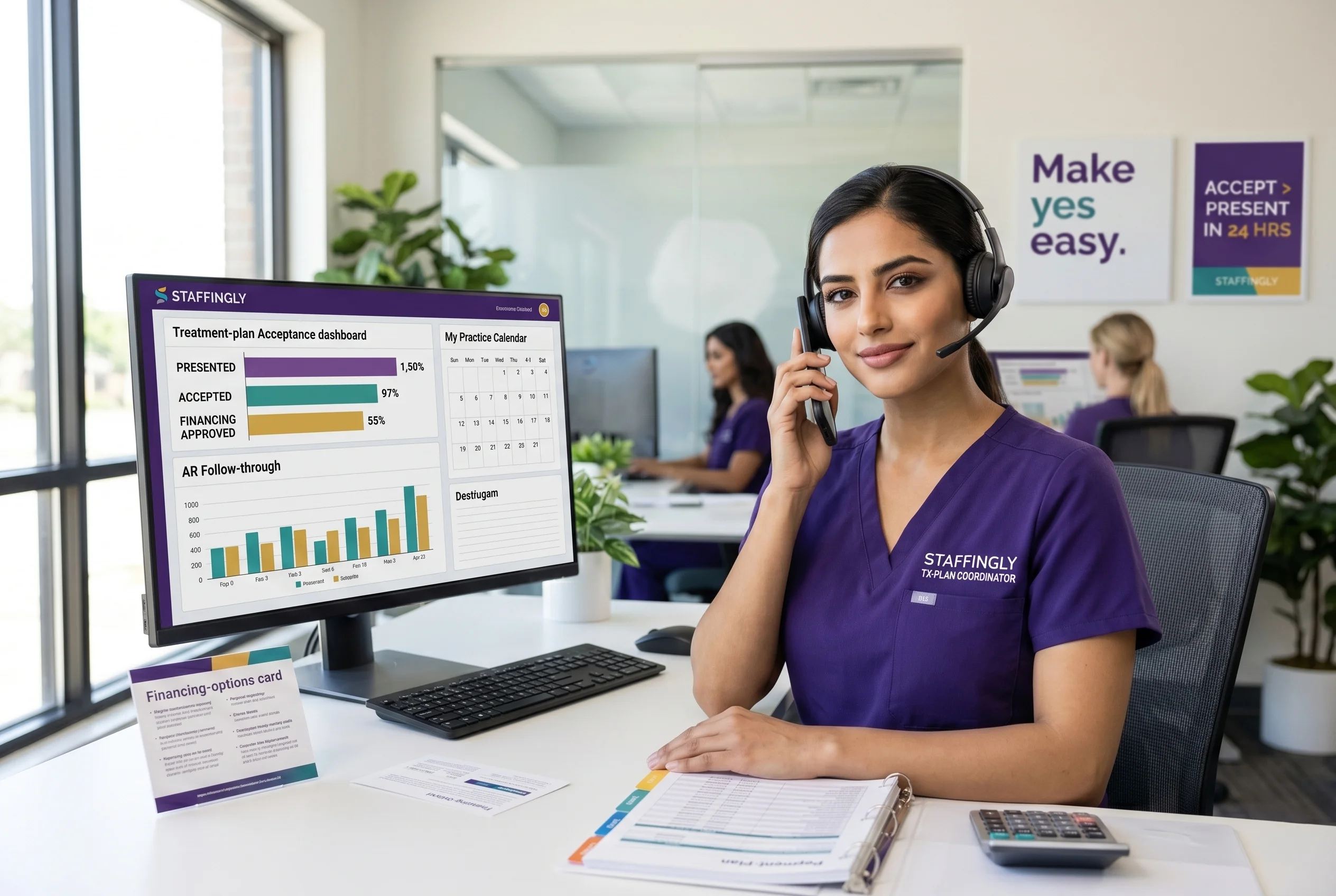
Trained dental billing support, inside your software
CDT-trained billers under HIPAA-aware workflows.
A managed dental billing team, built around your software
Medical cross-coding is the workflow of billing dental procedures that are medically necessary to the patient’s medical plan instead of, or in coordination with, the dental plan. Sleep apnea oral appliances, TMJ procedures, biopsies, and medically-necessary oral surgery typically qualify. Cross-coding requires CDT plus CPT and HCPCS fluency, ICD-10 mapping, and modifier discipline per LCD. CDT-trained specialists alone cannot do it. Cross-coded specialists can.
Tell us about your practice.
Send us your situation and our team will scope the right setup, usually within one business day. No obligation.
What You Need to Know About Medical Cross-Coding for Dental Practices
Sleep apnea oral appliances
HCPCS E0485 prefabricated mandibular advancement device, E0486 custom mandibular advancement device, K1027 oral device for sleep apnea. ICD-10 G47.33 obstructive sleep apnea. Modifier KX, GA, or GZ per Medicare DME MAC LCD. Cross-coded to medical, not dental.
TMJ and oral surgery
TMJ procedures, biopsies (D7286, D7287 with CPT 41105 or 41108), retained root removal, impacted third molars when medically necessary, and oral pathology workups billed to medical. ICD-10 M26.6 TMJ disorders, K12 stomatitis, K09 cysts. Medical pre-auth required on most.
Stacked compliance posture
HIPAA, SOC 2 Type II, ISO 27001, aligned workflows. Signed BAA, role-based PMS access, audit logging on every claim. PHI never leaves the controlled environment.
Why Is Medical Cross-Coding So Hard for Dental Practices?
Most dental practices submit cross-codable cases to the dental plan because the team only knows CDT. Three patterns leave significant revenue on the table.
Sleep apnea cases go to dental and get denied
Sleep apnea oral appliances are a medical benefit, not a dental one. Submitted to dental, they deny. Submitted to medical with the right HCPCS, ICD-10, and modifier, they pay. AAOMS data and Medicare DME MAC publications confirm the medical pathway. Practices without CPT fluency lose the case.
Modifier KX, GA, GZ get applied wrong
Medicare DME MAC LCDs require specific modifiers on E0485, E0486, and K1027. KX confirms medical-necessity documentation is on file. GA confirms an Advance Beneficiary Notice was issued. GZ confirms the provider expects denial. Wrong modifier triggers denial or down-coding. Most dental teams have never seen these modifiers.
ICD-10 mapping is unfamiliar
Medical claims need ICD-10 diagnosis codes. G47.33 obstructive sleep apnea, M26.6 TMJ disorders, K12.0 recurrent oral aphthae, K09.0 developmental odontogenic cysts. Dental teams trained only on CDT lack the ICD-10 fluency to submit a clean medical claim.
A managed dental billing team, in practice
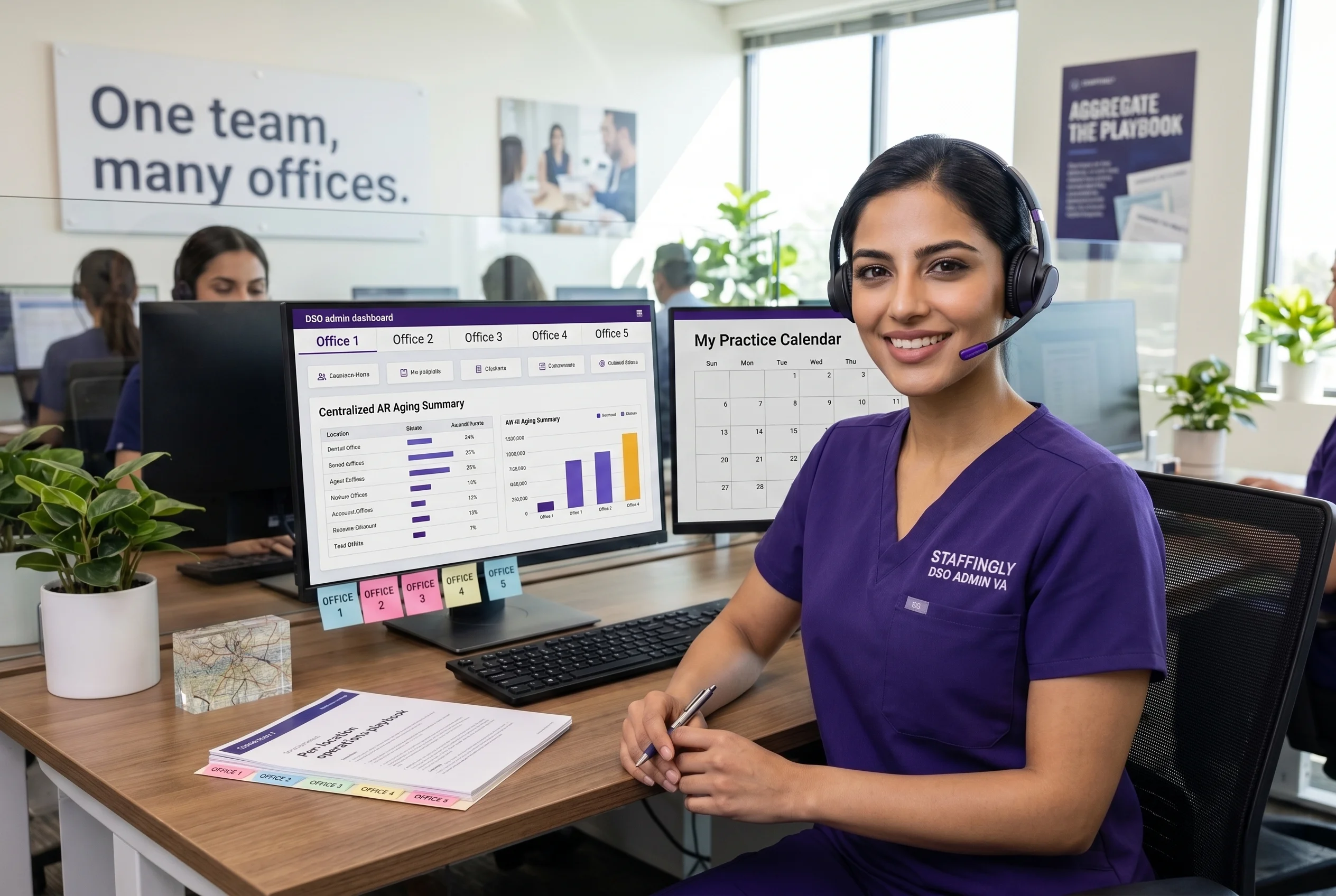
Inside the billing queueA trained Staffingly biller works your claims, denials, and AR inside your existing dental software.
How Is Staffingly’s Medical Cross-Coding Different?
Most outsourced dental billers run CDT only. Ours run CDT plus CPT and HCPCS plus ICD-10 plus modifier discipline. Four differences that matter.
CDT plus CPT plus HCPCS depth
Specialists pre-tested on CDT D0150 through D9999, CPT 41105 and 41108 for biopsies, HCPCS E0485, E0486, K1027 for sleep appliances, and the full cross-coded code set. Not CDT generalists guessing at medical codes.
ICD-10 mapping per case
Every cross-coded case gets an ICD-10 diagnosis code mapped to the clinical documentation. G47.33 sleep apnea, M26.6 TMJ, K12 stomatitis, K09 cysts. Documentation pulled from the chart to support the ICD-10 selection. Not a default code on every claim.
Modifier discipline per LCD
Medicare DME MAC LCDs and commercial medical plan policies dictate modifier usage. KX, GA, GZ applied per the published LCD on every sleep apnea claim. Modifier usage documented per claim. No guesswork.
2-Week Free Trial
The industry standard is zero risk-free trial. Staffingly gives you 14 days of live cross-coding at the same rate. Cancel before day 14 and owe nothing. No annual contracts after, ever.
How Does the Medical Cross-Coding Process Work?
Six steps from strategy call to live cross-coded submission. First medical claim batch typically clears in week two.
Strategy call (15 min)
Tell us your cross-codable case mix: sleep apnea, TMJ, oral surgery, biopsies. We map your workflow live. No prep needed from you.
BAA + PMS + medical clearinghouse access
Signed business associate agreement. Role-based access provisioned in Dentrix, Open Dental, Eaglesoft, Curve, Denticon, Carestack, ClearDent, MacPractice, Practice-Web, or SoftDent. Medical clearinghouse credentials added so cross-coded claims route to medical, not dental.
Payer and LCD playbook capture
Top medical payers documented per office. Medicare DME MAC LCDs for sleep apnea, commercial medical policies for TMJ and oral surgery, ICD-10 mapping rules, modifier usage per LCD. Locked in writing.
Parallel cross-coding starts
Week 2. Our specialists identify cross-codable cases at chart review, map ICD-10, select HCPCS or CPT, apply the right modifier, and submit to medical. Daily queue review with your office. Outcomes posted to the PMS same-day.
Decision point (day 14)
Pilot results reviewed: cross-coded claim approval rate, dollars recovered from medical, denial rate by code. Go or no-go. No penalty if you cancel.
Full handoff, cadence locked
Daily cross-coding cadence locked. Weekly approval-rate dashboard by code. Monthly LCD refresh as Medicare and commercial medical policies update. Quarterly business review.
Where Can You Get Medical Cross-Coding Services for Dental Practices?
Our cross-coding team works remotely inside your dental PMS and the medical clearinghouse. Wherever your practice is located, you get specialists pre-trained on CDT, CPT, HCPCS, ICD-10, and modifier discipline per LCD.
One Flat Weekly Rate. No Surprises.
Dedicated virtual dental assistants at a fixed weekly cost. 45 hours per week, fully managed. No contracts, no minimums, no hidden fees.
Want to compare against an in-house hire? Use the savings calculator.
Frequently asked questions
Which dental cases qualify for medical cross-coding?
Sleep apnea oral appliances (HCPCS E0485, E0486, K1027), TMJ procedures, biopsies (D7286, D7287 with CPT 41105 or 41108), retained-root removal with medical necessity, impacted third molars in medically-complex patients, oral pathology workups, and accident-related dental trauma. Each case needs ICD-10 mapping and supporting clinical documentation.
When does medical insurance pay before dental?
On medically-necessary procedures, the patient’s medical plan is typically primary and dental is secondary. Sleep apnea appliances bill to medical first. TMJ procedures bill to medical first. Biopsies bill to medical first. The dental plan picks up the remaining balance if any. Coordination of benefits documented per case.
What modifiers apply to sleep apnea oral appliances?
Medicare DME MAC LCDs require KX, GA, or GZ on E0485, E0486, and K1027. KX confirms medical-necessity documentation is on file. GA confirms an Advance Beneficiary Notice was issued. GZ confirms the provider expects denial. Wrong modifier triggers denial or down-coding. Documented per claim.
Do you handle commercial medical plans in addition to Medicare?
Yes. Commercial medical plans have their own published policies for sleep apnea, TMJ, and oral surgery. Aetna, Cigna, BCBS, UnitedHealthcare, and others all publish policies on these procedures. Specialists know the policy per payer.
Which dental PMS systems do you support?
Dentrix, Dentrix Ascend, Open Dental, Eaglesoft, Curve Dental, Denticon, Carestack, ClearDent, MacPractice, Practice-Web, and SoftDent. Medical clearinghouse access provisioned in Change Healthcare, Availity, or your existing medical clearinghouse.
What ICD-10 codes come up most often in cross-coding?
G47.33 obstructive sleep apnea, M26.6 TMJ disorders, K12 stomatitis, K09 developmental odontogenic cysts, K04 pulp and periapical diseases when medically complex, S02 fracture of skull and facial bones for trauma cases. Each ICD-10 mapped to documentation in the chart.
How does pricing work?
Flat per-specialist weekly rate. $399 single specialist, $349 at volume (5 or more), $299 enterprise (10 or more). 2-week free trial at the same rate. No per-claim fees. No percentage-of-collections. No long-term contracts.
How are your specialists trained, and where do they work from?
Specialists are selected from top-tier healthcare and dental programs, pass rigorous neutral-accent English certifications, and work from biometric-secured HIPAA-aware facilities. Teams are trained specifically for medical cross-coding workflows including CDT, CPT, HCPCS, ICD-10, and modifier discipline per LCD. Support teams operate globally, including secured facilities.

President and CEO, Staffingly, Inc. 25+ years in IT consulting and healthcare BPO operations. One of the earliest US operators to set up an RPO/BPO delivery network in India. Leads AI-driven healthcare workflows that help dental practices and DSOs cut admin costs without compromising care.

Senior Process Associate, Staffingly, Inc. BDS from Sri Sai College of Dental Surgery, Telangana. Hands-on experience in dental front-office operations, medical billing, EHR workflows, and US specialty practice administration. Former Dental Health Facilitator at FMS Dental Hospitals and Senior Medical Billing Specialist supporting US dental practices. Reviews dental content for terminology, workflow accuracy, and compliance fit.
Security Your Compliance Officer Will Sign Off On
Staffingly is audited to SOC 2 Type II with zero exceptions and certified for ISO/IEC 27001:2022, HIPAA, and GDPR. In eight years we have never had a breach. Every workstation runs inside the Venn Blue Border secure enclave on US-based servers, screen captures and downloads are blocked by policy, and every engagement operates under a signed BAA, and Staffingly maintains $5M in professional liability (E&O) and cyber insurance as part of its enterprise risk-management program.