

 Book a Demo to Build Your Team Today!
On-Demand Outsourcing BPO Services for Healthcare Providers With 24/7 Coverage!
Save up to 70% on staffing costs!
Browse Specialty Staffing Services


What Patients Need to Know About High-Deductible or Cost-Sharing Plans?
High-deductible and cost-sharing health insurance plans have become increasingly common, shifting more financial responsibility onto patients. While these plans often feature lower monthly premiums, they require patients to meet a substantial deductible or pay significant cost-sharing amounts before the insurer contributes toward covered services. This structure can lead to confusion and unexpected financial burdens if patients are not fully aware of their obligations. Challenge In this scenario, the patient is technically covered by insurance but remains responsible for full payment
 Noah Thomas

Understanding Coverage Limitations and Plan Exclusions in Health Insurance
Health insurance is designed to provide financial protection for patients, but not all medical procedures, providers, or locations are covered under every plan. Coverage limitations or plan exclusions occur when a patient’s insurance plan does not include a specific service, provider, or facility, leaving patients responsible for some or all of the costs. Understanding these exclusions is crucial for both healthcare providers and patients to avoid unexpected bills and ensure informed decision-making. Challenge A common challenge in healthcare administration arises
Noah Thomas

5 Reasons Every Small Practice Should Consider a Virtual Medical Assistant
Dr. Kim runs a small primary care clinic in a suburban neighborhood. She loves her patients, but between managing phone calls, juggling appointments, verifying insurance, and keeping up with documentation, her day often stretches late into the evening. One day, she brings in a Virtual Medical Assistant (VMA)—a remote professional who handles all those non-clinical headaches. Suddenly, Dr. Kim’s evenings are hers again, her patients feel more cared for, and her front desk staff can finally breathe. This isn’t just
 William Brown

HMO vs. PPO vs. EPO: Understanding Plan Types in Eligibility Checks
Maria, a front-desk coordinator, is on her third call of the morning with an insurance company. A patient is waiting for confirmation on whether their specialist visit is covered. The patient’s plan says “EPO,” but Maria isn’t sure if it works like a PPO or an HMO. Meanwhile, the waiting room is filling up. Phones are ringing. Frustration builds.Sound familiar? Insurance plan types—HMO, PPO, and EPO—are more than just acronyms. They directly impact eligibility checks, referrals, and reimbursement. If you
William Brown

Mastering Digital HealthCare with Strategic Outsourcing
Digital healthcare is a fast-evolving, multidisciplinary field that merges digital technologies with healthcare services. It leverages information and communication technologies (ICTs) to transform how care is delivered, accessed, and experienced. The ecosystem includes mobile health (mHealth) apps, telemedicine platforms, electronic health records (EHRs), health information systems (HIS), enterprise resource planning (ERP), and customer relationship management (CRM) tools. Additionally, the field integrates advanced technologies such as big data analytics, genomics, and artificial intelligence (AI). The primary objectives are to improve service
 Sophia Wilson

How Technology Speeds Up Prior Authorizations and Boosts Claim Reimbursements?
Prior authorization (PA) is a critical but often contentious component of modern healthcare. While its purpose is to ensure medical necessity and control costs, the process frequently becomes a bottleneck. It affects patient care, provider efficiency, and financial stability. Understanding the intricacies, inherent challenges, and strategic solutions is vital for any healthcare practice seeking operational excellence and optimal patient outcomes. What Is Prior Authorization? At its core, prior authorization is a cost-control mechanism used by health insurance plans. It requires
Sophia Wilson
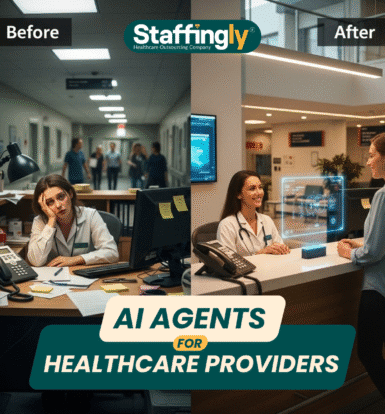
How AI Voice Assistants Are Redefining Healthcare Operations?
When news broke that a major organization let go of 10,000+ administrative employees, it raised an important question, What if healthcare leaders could redirect those same resources to patient care, technology, and growth instead of routine admin work? For forward-thinking hospitals, clinics, and healthcare networks, this isn’t just a hypothetical, it’s happening right now. AI-powered voice assistants are transforming how healthcare providers manage their frontlines, allowing them to run leaner, smarter operations while keeping the focus exactly where it belongs:
 Swapnil G
How Has AI Impacted the Role of the Medical Scribe?
AI hasn’t just changed the role of the medical scribe—it’s completely redefined it. What used to be a human typing away during or after patient visits is now an intelligent system that listens, learns, and documents in real time. For healthcare providers like you, that means less time behind a screen, and more time with patients. How Is AI Scribing Useful in Healthcare? The short answer? It makes your job easier. AI-powered medical scribing tools capture clinical conversations in real
 Venkata Ramarao Sanka
 Read Case Studies
Ready to Build Your Team?

Categories

Recent Posts
- Revenue Cycle Management: The Complete Guide to Maximizing Your Practice’s Financial Health
- Prior Authorization Is Costing Your Practice 16+ Hours Per Week: Here’s How to Fix It
- How AI Voice Bots Are Fixing the Healthcare Front Desk?
- How To Cut Claim Denials In Half Without Adding More Staff?
- How AI Chatbot Services Are Redefining Patient Communication for Clinics?

 Virtual Medical Assistants
 Insurance Verification
 Prior Authorization (AI)
 Medical Scribing (AI)
 Telemedicine Services
 Medical Data Entry
 Medical Coding
 Revenue Cycle Management