
 Book a Demo to Build Your Team Today!
On-Demand Outsourcing BPO Services for Healthcare Providers With 24/7 Coverage!
Save up to 70% on staffing costs!
Browse Specialty Staffing Services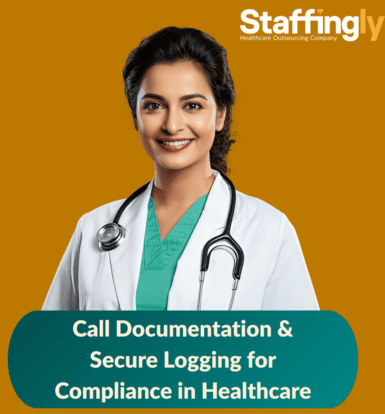


Call Documentation & Secure Logging for Compliance in Healthcare
Call documentation and secure logging are essential components of HIPAA-compliant healthcare communication. Every patient interaction—whether it’s a call, message, or appointment—is securely recorded and logged to create an auditable trail that protects both the provider and the patient. Think of it as a secure, time-stamped diary of all communication activities, ensuring accountability and compliance. Steps: How Does Call Documentation & Secure Logging Work? Initial Compliance Setup & Access Controls Healthcare providers sign a Business Associate Agreement (BAA), and role-based permissions
 William Brown
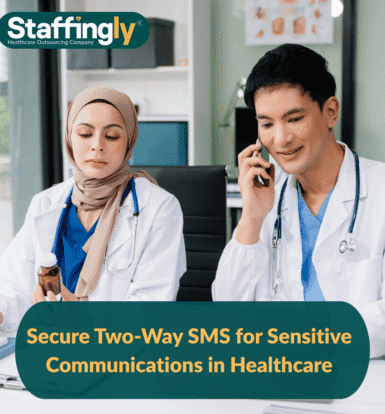
Secure Two-Way SMS for Sensitive Communications in Healthcare
As healthcare continues to evolve in the digital age, one of the most pressing challenges healthcare executives face is maintaining secure communication channels that protect sensitive patient information while improving operational efficiency. Among the many communication solutions available, two-way secure SMS has emerged as a leading choice for ensuring compliance with regulations such as HIPAA and driving substantial return on investment (ROI). This article explores the key benefits of two-way secure SMS systems, highlighting their potential to enhance data security,
William Brown
How Secure SMS Improved Patient Communication in US Healthcare ?
In healthcare, every minute matters—for both patients and staff. Traditional phone calls often lead to long hold times, missed connections, and frustrated patients. That’s why more providers are turning to HIPAA-compliant two-way secure SMS for healthcare communication. This modern approach eliminates the phone tag problem, streamlines operations, and boosts patient satisfaction. Why Two-Way Secure SMS Works for Healthcare ? Instead of sitting on hold, patients can send a secure text, get a timely response, and move on with their day.
 Venkata Ramarao Sanka
How Secure Messaging Enhances Speed and Security in Healthcare?
In today’s healthcare environment, timely communication is crucial. Doctors, nurses, and other healthcare professionals rely on receiving accurate and up-to-date patient information to make the best decisions. However, traditional voicemail systems pose a major challenge due to delays and potential security risks. By switching to app-based secure messaging, healthcare providers can ensure that critical patient information reaches them promptly, securely, and efficiently without the risk of missed or misplaced messages. Key Takeaways: Voicemail systems cause delays, missed messages, and security
 Sophia Wilson
Improving Patient Satisfaction with IVR System Changes in Healthcare
Patient satisfaction often hinges on clear, seamless communication especially when interacting with healthcare providers. Interactive Voice Response (IVR) systems, though essential, can frustrate callers if not carefully managed. When patient feedback identified issues within IVR menus, targeted small adjustments transformed the patient experience dramatically, with Staffingly playing a crucial supporting role. Identifying the Problem: Listening to Patient Feedback Initially, IVR systems were deployed to simplify patient communication, manage call volumes, and improve operational efficiency. However, real-world patient experiences revealed significant
Sophia Wilson
Improving Patient Care Through Missed Call Alerts in Healthcare
In Today’s Healthcare Environment… Time is precious, accuracy is non-negotiable, and communication gaps don’t just cost patience they compromise care quality. A single missed call can result in delayed care, missed follow-ups, or billing complications. When you rely on real-time communication to keep patient care flowing, every call matters. Every moment spent chasing down voicemails or wondering if a patient ever called back adds up. But what if you didn’t have to wait for someone to flag a missed interaction?
Sophia Wilson
How Secure SMS Follow-ups Improve Healthcare Communication?
“We Stopped Chasing Calls and Patients Finally Responded” Dr. Emily Carter runs a bustling internal medicine clinic in Austin, Texas. Her clinic serves hundreds of patients every week, and her mission has always been clear: spend more time caring for patients, less time on red tape. But one thing consumed her staff’s energy: the endless phone calls. “We’d call patients about lab results, appointment reminders, or postvisit instructions and nine times out of ten, we’d hit voicemail,” Dr. Carter recalls.
Sophia Wilson

“Why Is This Client Still on the Waitlist? How Can We Manage Referral Bottlenecks?”
In the fast-paced world of healthcare, timely care is essential. However, many healthcare providers encounter a common issue: “Why Is This Client on the Waitlist?” Managing referral delays is crucial to ensure smooth care transitions. Referral bottlenecks, often caused by delays in scheduling or follow-up, can significantly affect patient outcomes and create unnecessary stress for both patients and providers. A typical scenario arises when a patient has been referred for care but still waits for their appointment to be scheduled.
Sophia Wilson
 Read Case Studies
Ready to Build Your Team?

Categories

Recent Posts
- Revenue Cycle Management: The Complete Guide to Maximizing Your Practice’s Financial Health
- Prior Authorization Is Costing Your Practice 16+ Hours Per Week: Here’s How to Fix It
- How AI Voice Bots Are Fixing the Healthcare Front Desk?
- How To Cut Claim Denials In Half Without Adding More Staff?
- How AI Chatbot Services Are Redefining Patient Communication for Clinics?

 Virtual Medical Assistants
 Insurance Verification
 Prior Authorization (AI)
 Medical Scribing (AI)
 Telemedicine Services
 Medical Data Entry
 Medical Coding
 Revenue Cycle Management