

 Book a Demo to Build Your Team Today!
On-Demand Outsourcing BPO Services for Healthcare Providers With 24/7 Coverage!
Save up to 70% on staffing costs!
Browse Specialty Staffing Services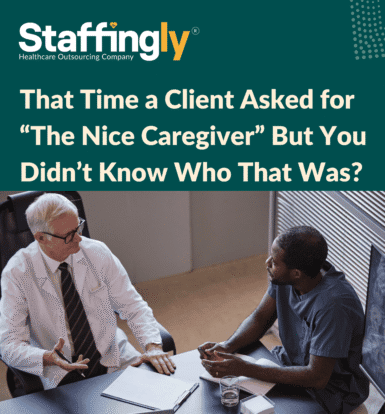


That Time a Client Asked for “The Nice Caregiver” But You Didn’t Know Who That Was?
In caregiving, there’s a fine line between meeting client preferences and interpreting them correctly. A common, yet sometimes funny situation arises when a client requests “the nice caregiver,” but there’s no clear record of who that actually is. It sounds simple, right? But without clear documentation and detailed client profiles, these vague preferences can cause scheduling confusion and frustration for both clients and caregivers. Let’s walk through how this issue can arise and what you can do to avoid it.
 Venkata Ramarao Sanka

When You Send a New Hire to a High-Acuity Case By Mistake?
In caregiving, experience is key, especially when dealing with high-acuity cases that require specialized skills. However, a small mistake in scheduling can lead to a mismatch, where the caregiver’s skill level doesn’t align with the complexity of the case. This real-world story demonstrates what happens when a new caregiver is sent to a high-acuity client, and why ensuring the right fit is essential. Key Takeaways: Mismatched skills: New hires may lack the experience required for high-acuity cases, leading to stress
 Emma Davis
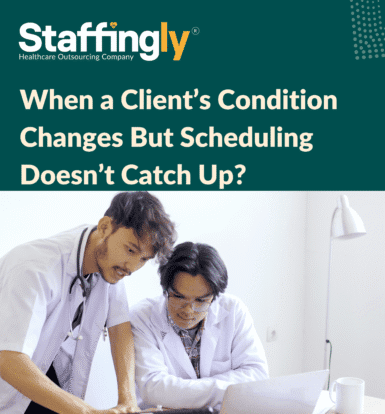
When a Client’s Condition Changes But Scheduling Doesn’t Catch Up?
In caregiving, the key to providing exceptional care is staying ahead of changes in a client’s condition. When a client’s health condition changes, whether it’s a decline in physical ability, a new diagnosis, or a change in medical needs, those updates must be reflected in the caregiving schedule. Unfortunately, when updating schedules after client condition changes doesn’t happen, the risks can be significant — both for the client and the care team. Here’s a breakdown of what happens when shift
Venkata Ramarao Sanka

When Two Clients Live on the Same Street And You Mix Them Up?
In the fast-paced world of caregiving, managing multiple clients and their specific needs can sometimes be a juggling act. While caregivers do their best to stay organized, sometimes small details, like similar names or addresses, can lead to unexpected mix-ups. A near-miss incident recently highlighted how something as simple as a wrong door knock can cause a ripple effect. Here’s the story and how we can avoid such mix-ups moving forward. Key Takeaways: Caregiver mix-up: A caregiver mistakenly knocks on
Emma Davis
 Read Case Studies
Ready to Build Your Team?

Categories

Recent Posts
- Revenue Cycle Management: The Complete Guide to Maximizing Your Practice’s Financial Health
- Prior Authorization Is Costing Your Practice 16+ Hours Per Week: Here’s How to Fix It
- How AI Voice Bots Are Fixing the Healthcare Front Desk?
- How To Cut Claim Denials In Half Without Adding More Staff?
- How AI Chatbot Services Are Redefining Patient Communication for Clinics?

 Virtual Medical Assistants
 Insurance Verification
 Prior Authorization (AI)
 Medical Scribing (AI)
 Telemedicine Services
 Medical Data Entry
 Medical Coding
 Revenue Cycle Management