
 Book a Demo to Build Your Team Today!
On-Demand Outsourcing BPO Services for Healthcare Providers With 24/7 Coverage!
Save up to 70% on staffing costs!
Browse Specialty Staffing Services


How Digital Healthcare Innovations Are Transforming Patient Outcomes?
The Shift Every Clinic Hopes For For decades, healthcare has been burdened by inefficiencies long wait times, heavy paperwork, and frustrating administrative bottlenecks. But in the last few years, a quiet revolution has taken hold. Digital healthcare innovations and outsourcing solutions are no longer optional add-ons; they are becoming the foundation for improving patient outcomes. “Technology isn’t just about speed it’s about patients getting care when they need it most.” From telehealth to outsourcing prior authorizations, these solutions are reshaping
 Sophia Wilson
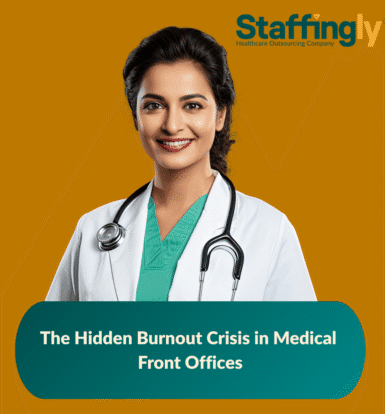
The Hidden Burnout Crisis in Medical Front Offices
Burnout Nobody Talks About When people hear “healthcare burnout,” they usually think of doctors and nurses. But there’s another group quietly burning out every day: the front office staff. These are the people who answer phones, schedule patients, process referrals, wrangle insurance, manage check-ins, and keep the entire clinic moving. They don’t get the headlines. But without them, the clinic stops functioning. “People think front desk is easy. It’s actually chaos with a smile.” The burnout crisis isn’t just in
Sophia Wilson

Improving Hospital Billing Outcomes with Staff Education
Hospital billing is one of the most critical processes in healthcare operations. Accurate billing ensures hospitals maintain financial stability while patients experience transparency and fairness in charges. However, billing errors, denials, and compliance failures continue to strain healthcare organizations. A proven solution to improving billing outcomes is structured staff education programs. By equipping employees with the knowledge, tools, and skills needed to navigate billing complexities, hospitals can reduce financial leakage, enhance compliance, and improve patient trust. Why Staff Education Matters
 Noah Thomas

Hospital Staff Training Programs for RCM Accuracy
Revenue Cycle Management (RCM) is the backbone of financial stability in hospitals. It ensures that services provided to patients are accurately documented, coded, billed, and reimbursed in compliance with regulations. Errors in RCM not only lead to revenue leakage but also increase the risk of audits, denials, and patient dissatisfaction. To strengthen accuracy, hospitals must invest in structured staff training programs tailored to the entire RCM workflow from patient registration through final payment posting. Importance of RCM Accuracy Accurate
Noah Thomas
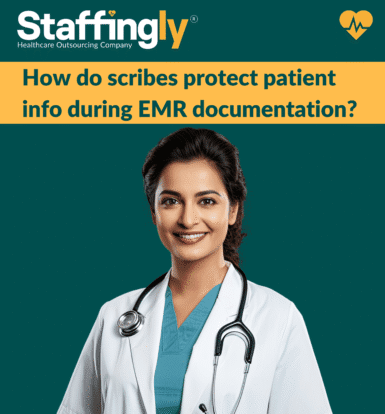
How do scribes protect patient info during EMR documentation?
Patients notice what’s typed, what’s repeated aloud, and who is present in the room. When a medical scribe is part of a visit, in-person or remote, the unspoken question often is: Is my information safe? 💬 “I love that my doctor focuses on me, but who is that person typing, and what do they see?” Scribes help clinicians focus on patients while ensuring accurate documentation. Protecting privacy is essential to maintaining trust, and with the right practices, patient information remains
 Emma Davis
How does HIPAA ensure patient data safety in virtual scribing?
Virtual medical scribes are transforming the healthcare industry by joining patient visits from secure locations to capture notes, orders, and codes. This technology allows healthcare providers to focus more on patient care instead of administrative tasks. But the primary concern for clinics remains: Is patient data safe? 💬 “If a scribe isn’t onsite, how do we ensure nothing leaks?” This guide breaks down how HIPAA protects patient health information (PHI) in virtual scribing and the essential controls healthcare providers should
 Venkata Ramarao Sanka
Healthcare HIPAA Agent Training: Keeping Hospital Compliance Tight
In today’s healthcare environment, maintaining compliance with the Health Insurance Portability and Accountability Act (HIPAA) is essential to protect sensitive patient information. Healthcare providers, administrative staff, and any individuals involved in the handling of Protected Health Information (PHI) must understand the critical importance of HIPAA regulations. Without the right training, even the smallest oversight can lead to severe penalties, data breaches, and a loss of patient trust. HIPAA Agent Training is designed to provide healthcare professionals with the knowledge and
 William Brown
How to Minimize Billing Errors in Hospital Revenue Cycle?
In the healthcare sector, billing errors pose a significant threat to hospital financial stability. Inaccurate billing can lead to claim denials, delayed reimbursements, and revenue loss, which ultimately affects the hospital’s cash flow and overall operational efficiency. Minimizing billing errors is a crucial step in optimizing the Revenue Cycle Management (RCM) process. This article explores the causes of billing errors in the hospital RCM and offers detailed strategies to minimize them. Common Causes of Billing Errors in Hospitals 1. Incorrect
Noah Thomas
 Read Case Studies
Ready to Build Your Team?

Categories

Recent Posts
- Revenue Cycle Management: The Complete Guide to Maximizing Your Practice’s Financial Health
- Prior Authorization Is Costing Your Practice 16+ Hours Per Week: Here’s How to Fix It
- How AI Voice Bots Are Fixing the Healthcare Front Desk?
- How To Cut Claim Denials In Half Without Adding More Staff?
- How AI Chatbot Services Are Redefining Patient Communication for Clinics?

 Virtual Medical Assistants
 Insurance Verification
 Prior Authorization (AI)
 Medical Scribing (AI)
 Telemedicine Services
 Medical Data Entry
 Medical Coding
 Revenue Cycle Management